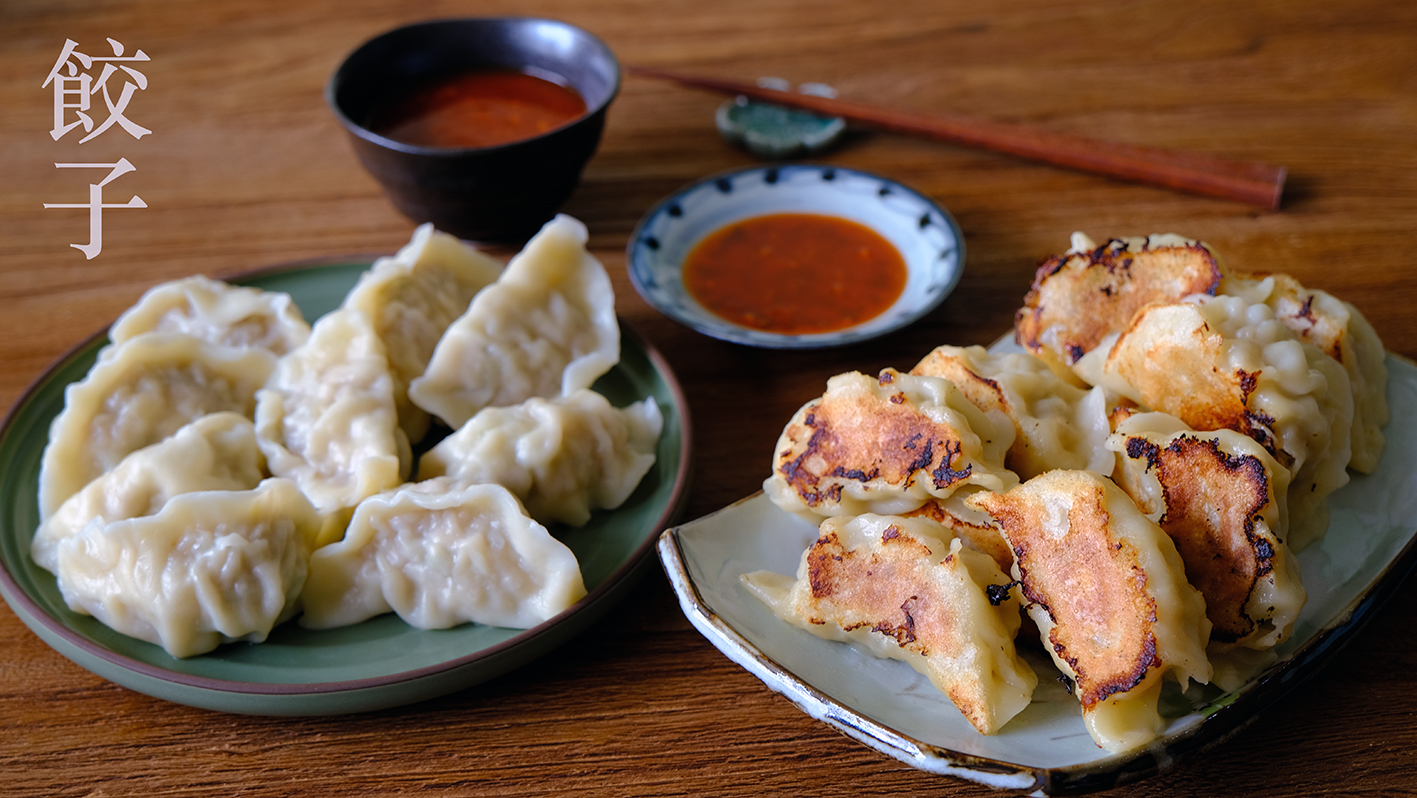
These are little pockets of light, joy and deliciousness; My little nephew can literally devour them by the plateful. 🥲😄 Maybe… this is the dumpling recipe that you need.“

The original Chinese dumplings are called Jiaozi (饺子) (also known as Gyoza in Japanese Language).

These dumplings consist of ground meat and vegetable filling that are wrapped into a thinly rolled piece of dough, which is then sealed by pressing the edges together.

My fingers clumsily stumbling over everything, getting the wrappers way too wet, putting in too much filling 🤣

Chinese dumplings (Jiaozi) may be divided into various types depending on how they are cooked.

- Pan-fried or Pan-Stick dumplings called 煎饺 (jiānjiǎo) or 锅贴 (guōtiē); also referred to as “Pot-Stickers”
- Deep-fried dumplings called 炸饺 (zhà jiǎo)
- Soup dumplings called 汤饺 (tāngjiǎo)
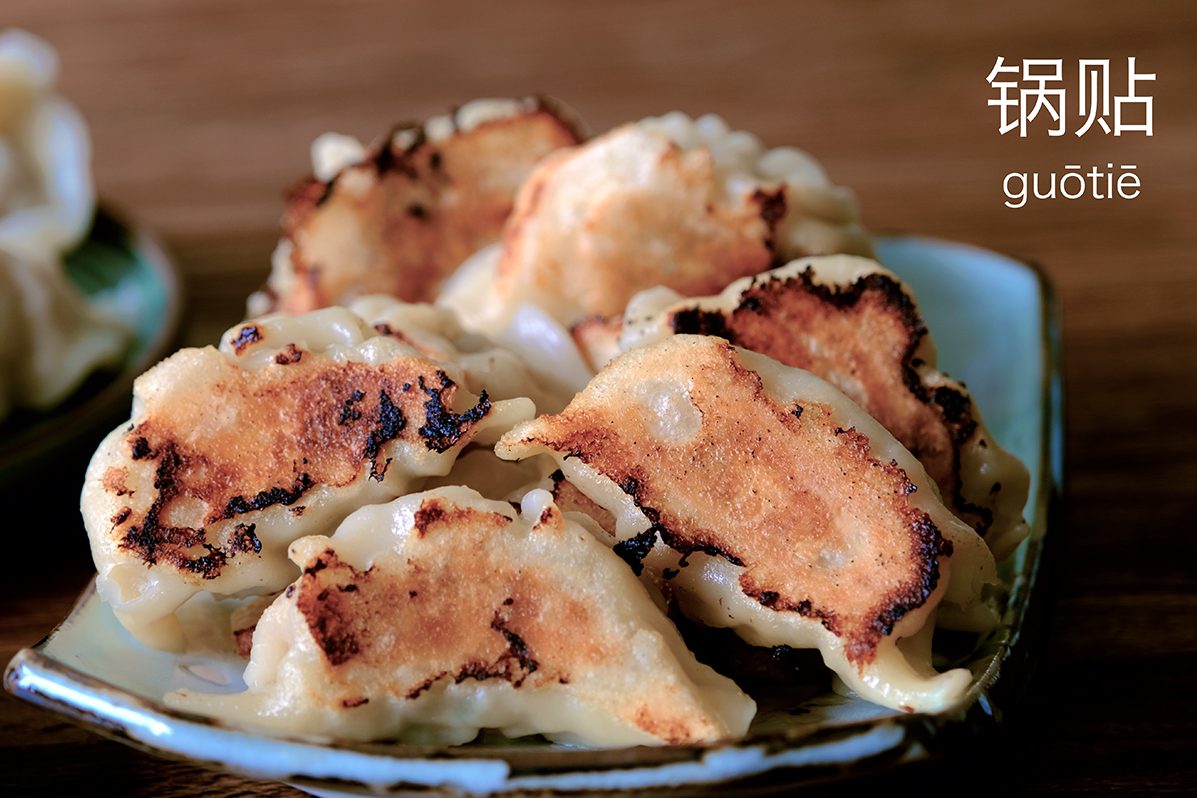
So what is the japanese version like?
The method of cooking Gyoza actually almost similar to Pan-Fried Method.
The difference is that Gyoza has a “golden skirt” surrounding the fried dumplings, gluing all the dumplings together.
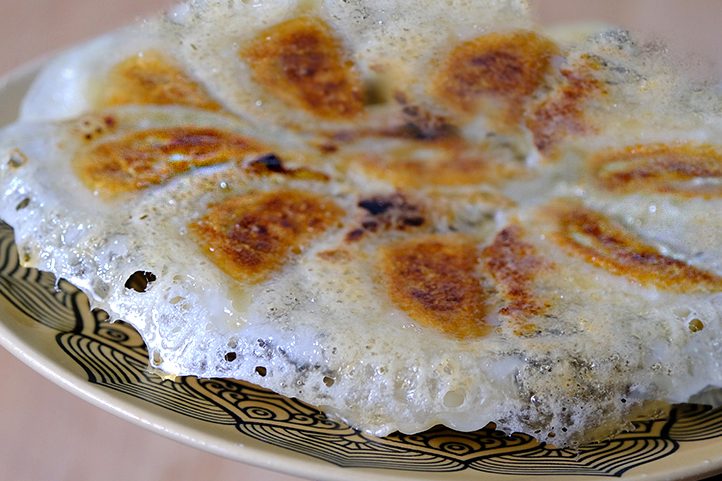
They are first fried in a hot pan until crispy brown on the bottom sides, then starch mixture is added before the pan is covered to quickly steam the entire dumplings.
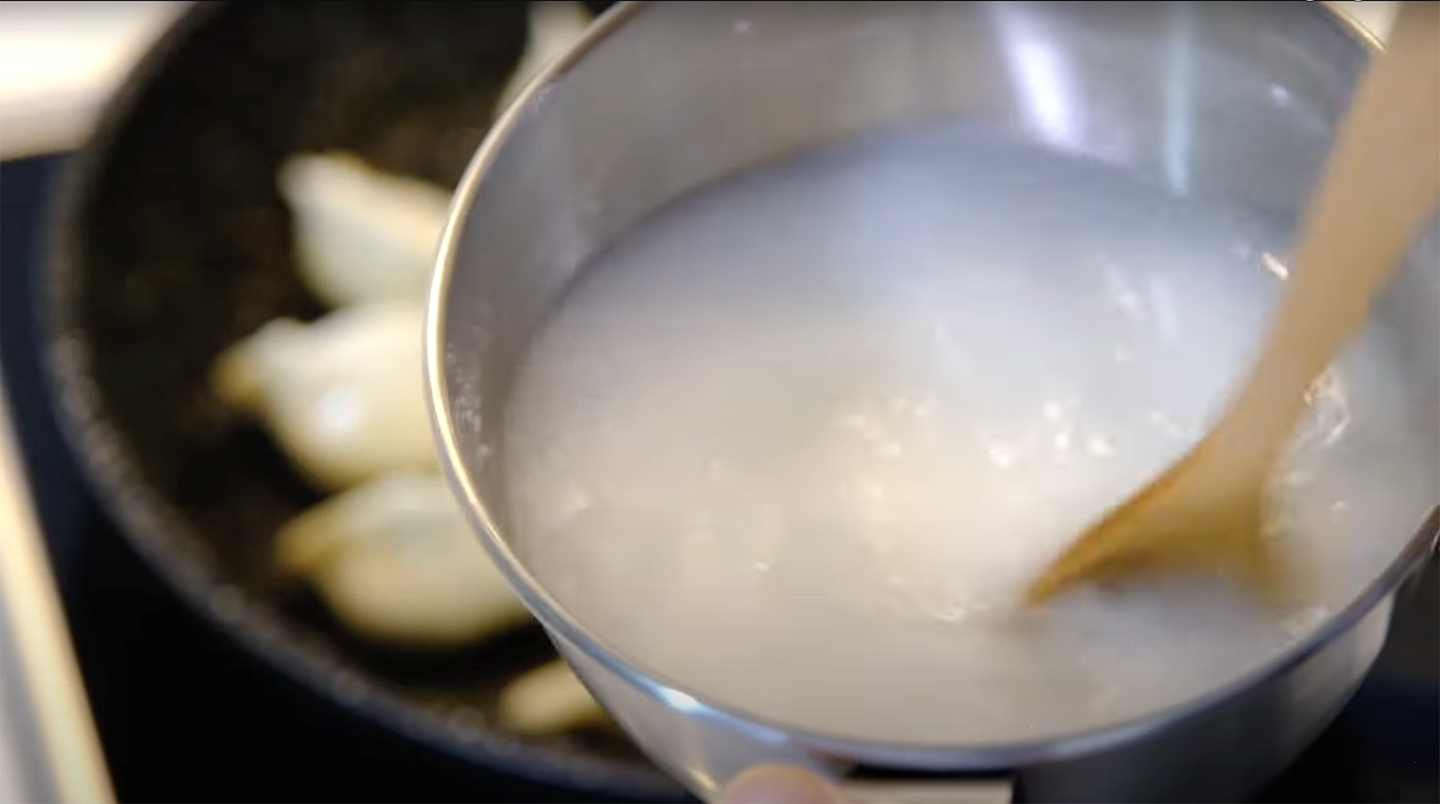
This technique gives Gyoza the best mix of textures, where you get crispy bottoms and tender soft tops that encase the juicy filling inside

This recipe produce 65-70 pieces.
I will guide you step by step on how to make it and also show you 3 methods for cooking the dumplings; Pan Fried, Boiled and Gyoza style.
Different method will produce slightly different texture but all of them are appetizing.
Dumplings are so handy to have, I really encourage you to make a big batch if time permits.
I hope this recipe provides all the information you need for a successful outcome (CLICK this link and  follow instructions in the video for more details)
🥟 Love you All
Let’s Talk about Dumpling Fillings

- Pork –While the original Chinese dumplings use ground beef, pork, lamb, chicken, fish, and shrimp for fillings; classic Gyoza usually consists of ground pork.
I prefer mixing pork and shrimp to develop and add a deeper umami flavour to the overall filling. - Cabbage –Chinese dumpling use Napa cabbage, but regular cabbage is commonly used for Gyoza.
As cabbage leaves are thick and hard, we use different ways to make the cabbage leaves wilted. I’m prefer to sprinkle salt to dehydrate the cabbage and squeeze the water out before mixing with meat. - Chinese Chives –Some people adds Chinese chives to their dumpling, but I usually skip the chives as my family don’t like its strong taste.
Instead, I add more green onions to the filling. - Aromatics –Garlic is commonly used in dumpling.
My mom always adds grated ginger and Coriander leaves too, so I do the same for my recipe. - Seasonings – The seasonings are simple, with just Fish Sauce, Light Soy Sauce, Sugar and a pinch of Salt and Pepper.
This way you can just enjoy the flavour and freshness of the main ingredients. - Binder – A bit of Sago or Tapioca Starch will make the insides of your dumplings super tender. It’s the secret to juicy, tender dumplings!
When you mix the water & starch and mix everything, it will come together into a homogenous paste, that’s what you want! - Vegetable and Sesame Oil – A little secret that can not only lock in the moisture of the vegetable fillings, but also enhance the aroma of the dumpling fillings.
Be Creative – There is plenty of room for creativity when comes to making dumpling. Feel free to experiment with different ingredients or seasonal vegetables.
For example, you can add some shiitake mushrooms to the filling. I like the meaty texture and juicy umami flavour from shiitake mushrooms.
How to Make the Skin Dough
All-Purpose or Plain Flour works very well for dumpling skin or wrapper.
It’s possible to use bread flour, but you might find the cooked wrappers a little too chewy.
You can also use a special dumpling bleached flour for a whiter results.
I personally don’t prefer to use it for a healthy reason.
You can make dumpling dough either by hand or in a stand mixer with a dough hook.


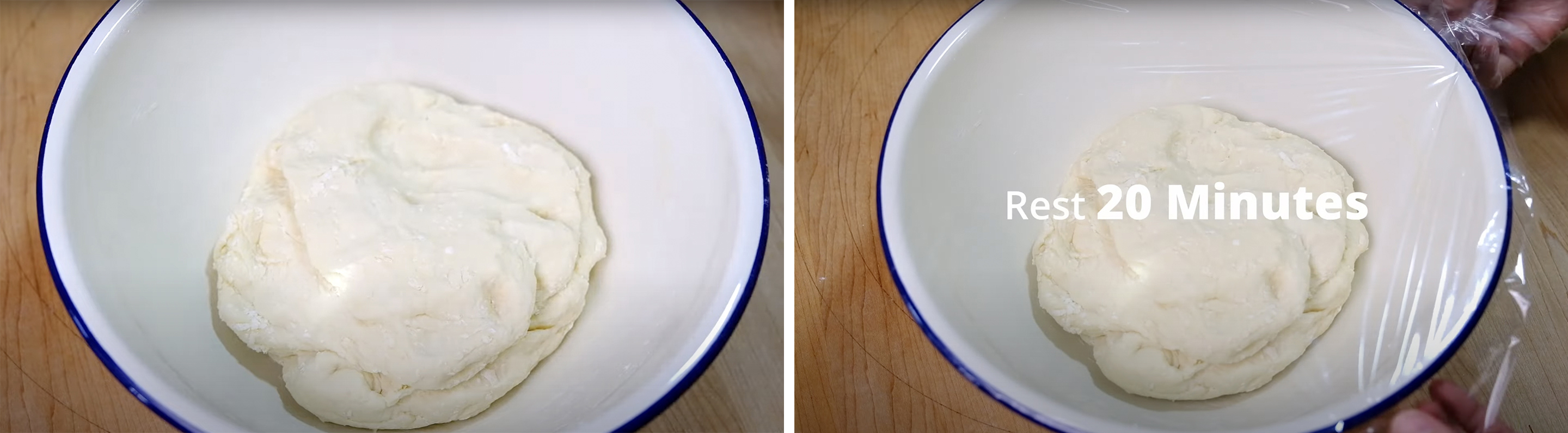
(By letting the dough rest, gluten bonds will begin forming, the dough will start to smooth out and soften)

Knead it again for about 1-2 min until it’s form a smooth medium-firm dough
Then cover and leave to rest for a further 60 minutes (max. 2 hours) before shaping
How to Prepare the Filling
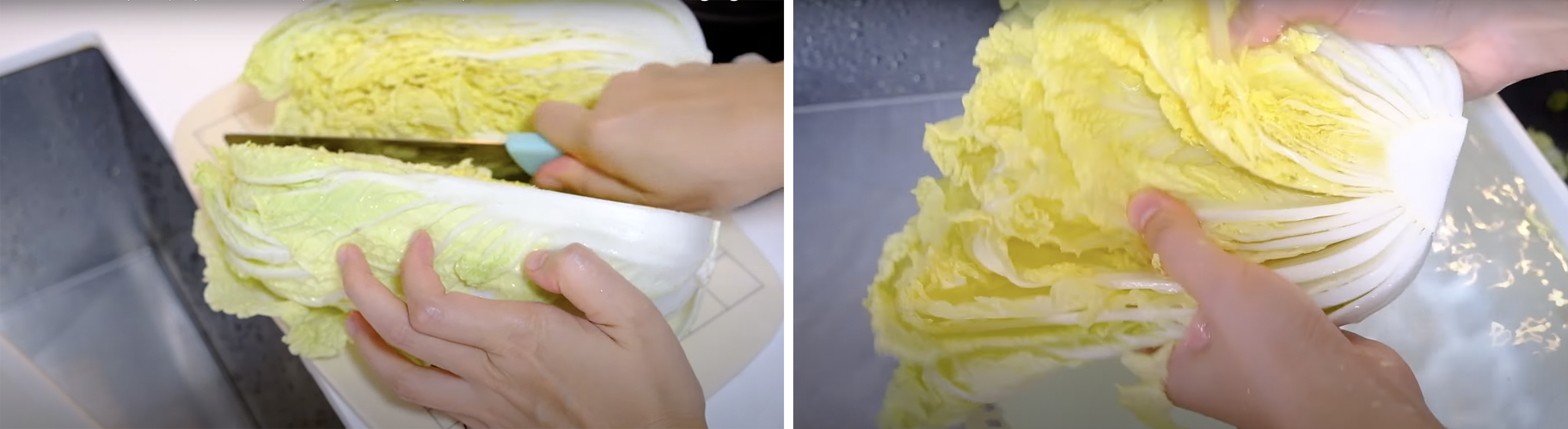

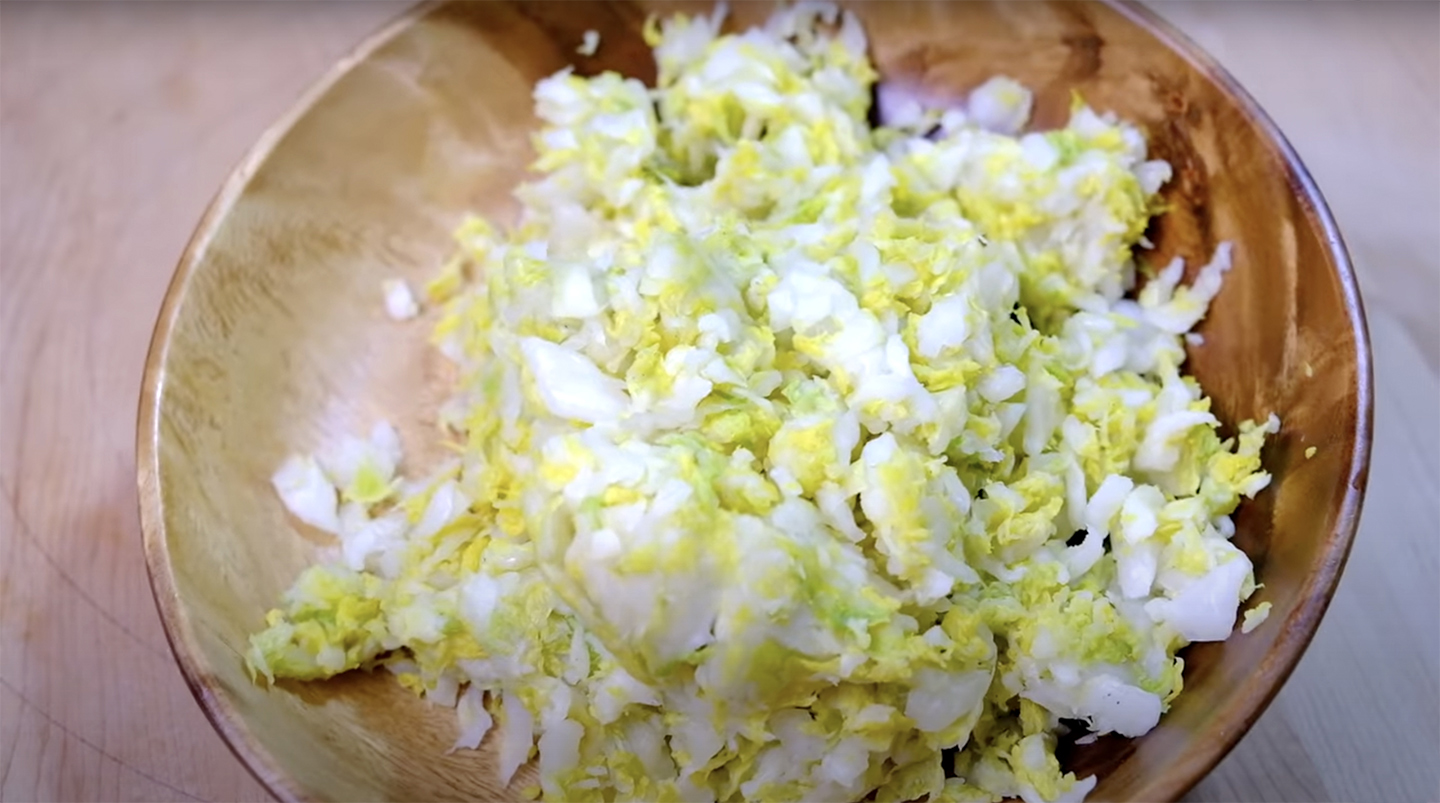
Turn it over, and then chop as finely as possible (about 1 x 1 cm)
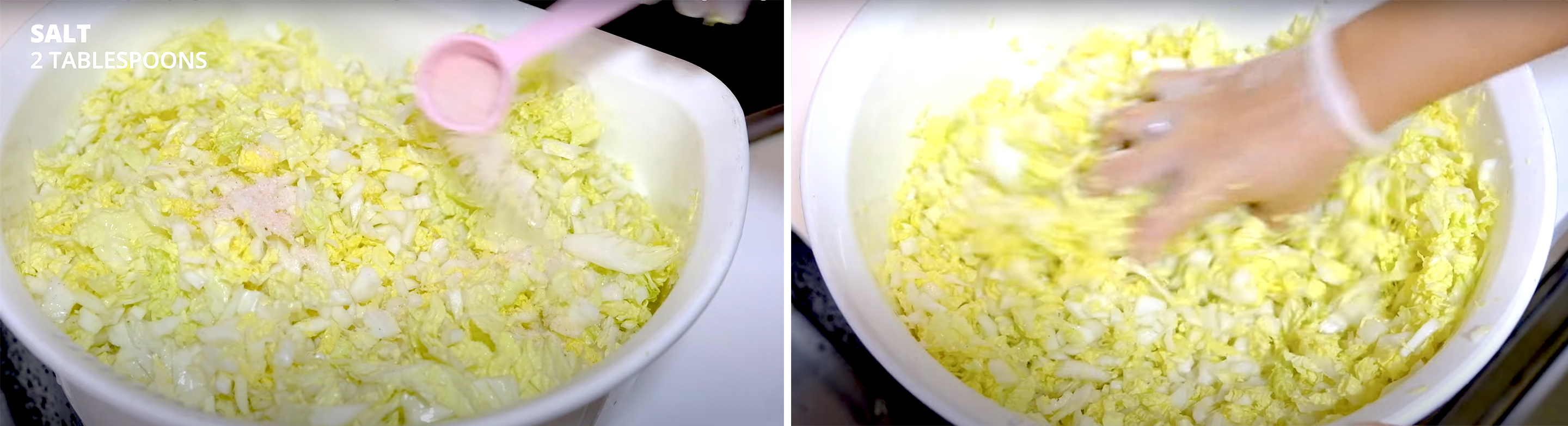
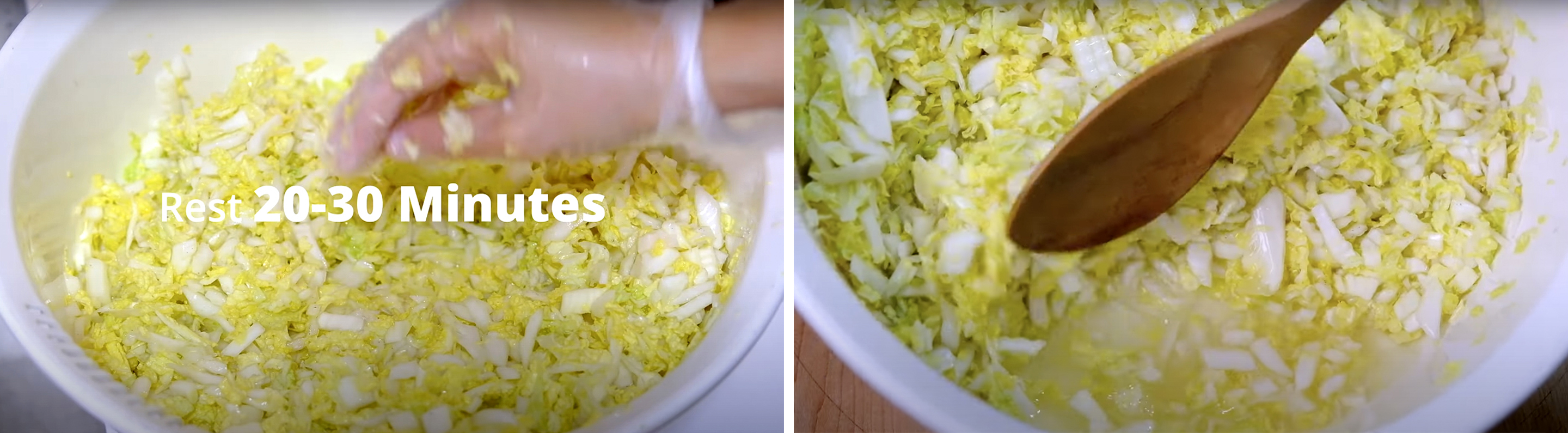
After 20 minutes, you can see a lot of liquid coming out of the cabbage
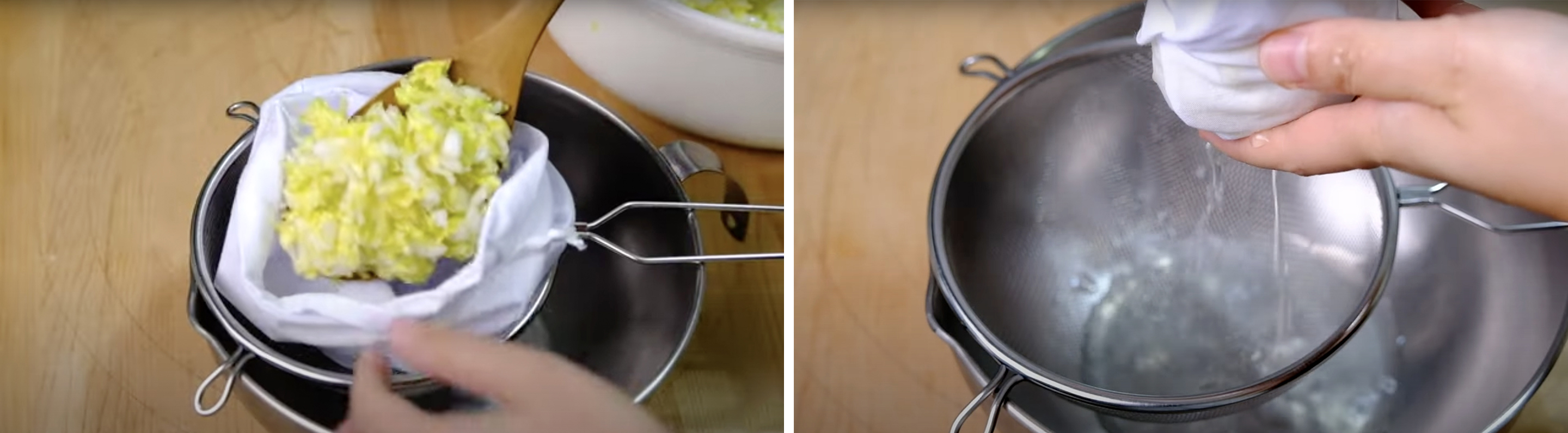
Set that aside…

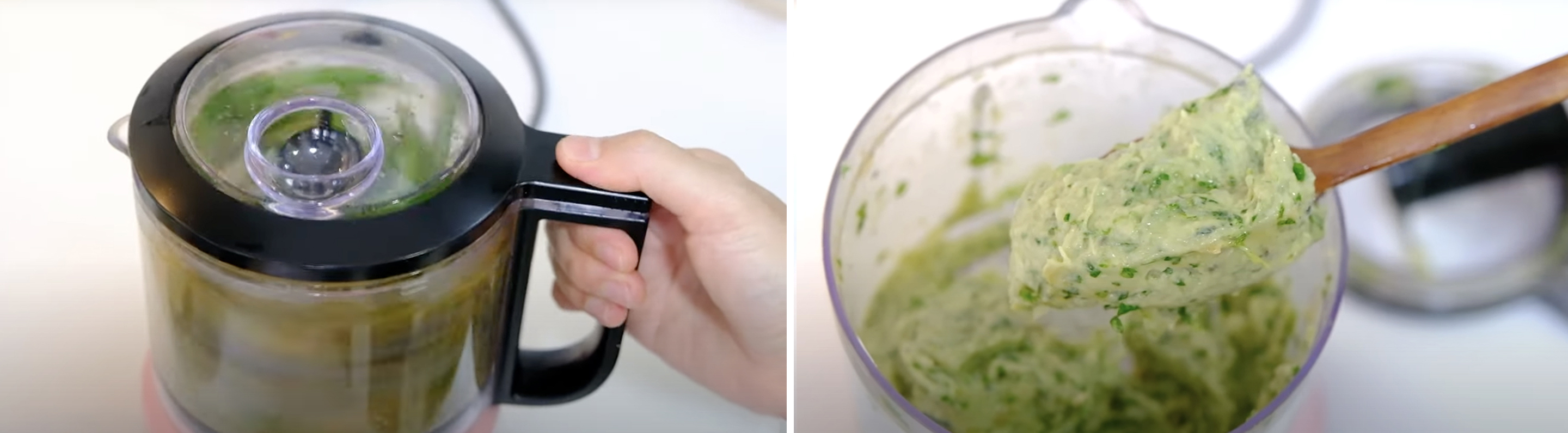
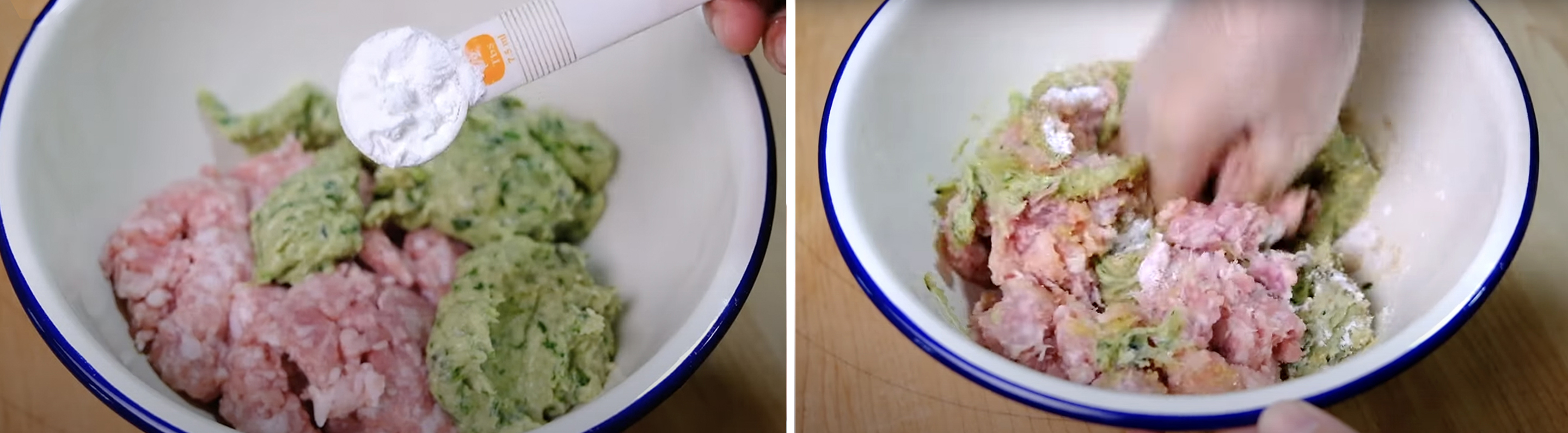
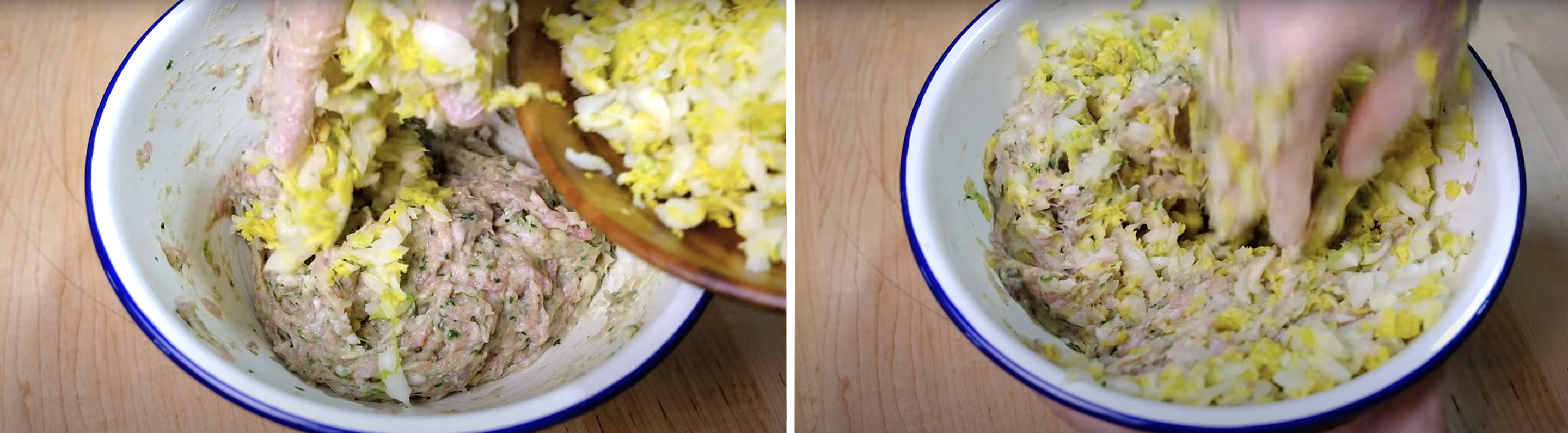
Mix 250 g Minced Pork (with fat), Blended Prawn Paste, 1/2 tbs Sago or Tapioca Starch, 1/2 tbs Salt, 2 tbs Sugar and 1/2 tsp White Pepper Powder
Mix it really well

Roll and Shape the Dumpling Skin
Cut about 1/3 of the dough (make sure that you keep the rest wrapped up so it doesn’t dry out).
Roll the dough into a 2 cm diameter ropes; and then cut it into small equal pieces (about 1 cm wide). There’s no need to be perfect or exactly even.
Flatten each piece into a round disc with the palm of your hand (this basic shape will make it easier when you roll it).
And then roll them into thin wrappers with a rolling pin; I use a roll & turn technique which produces wrappers that are thinner on the edge but slightly thicker in the middles (perfect for dumpling folding). If the dough sticks to the work surface or the rolling pin, dust with a little flour.
Dumpling Folding Techniques
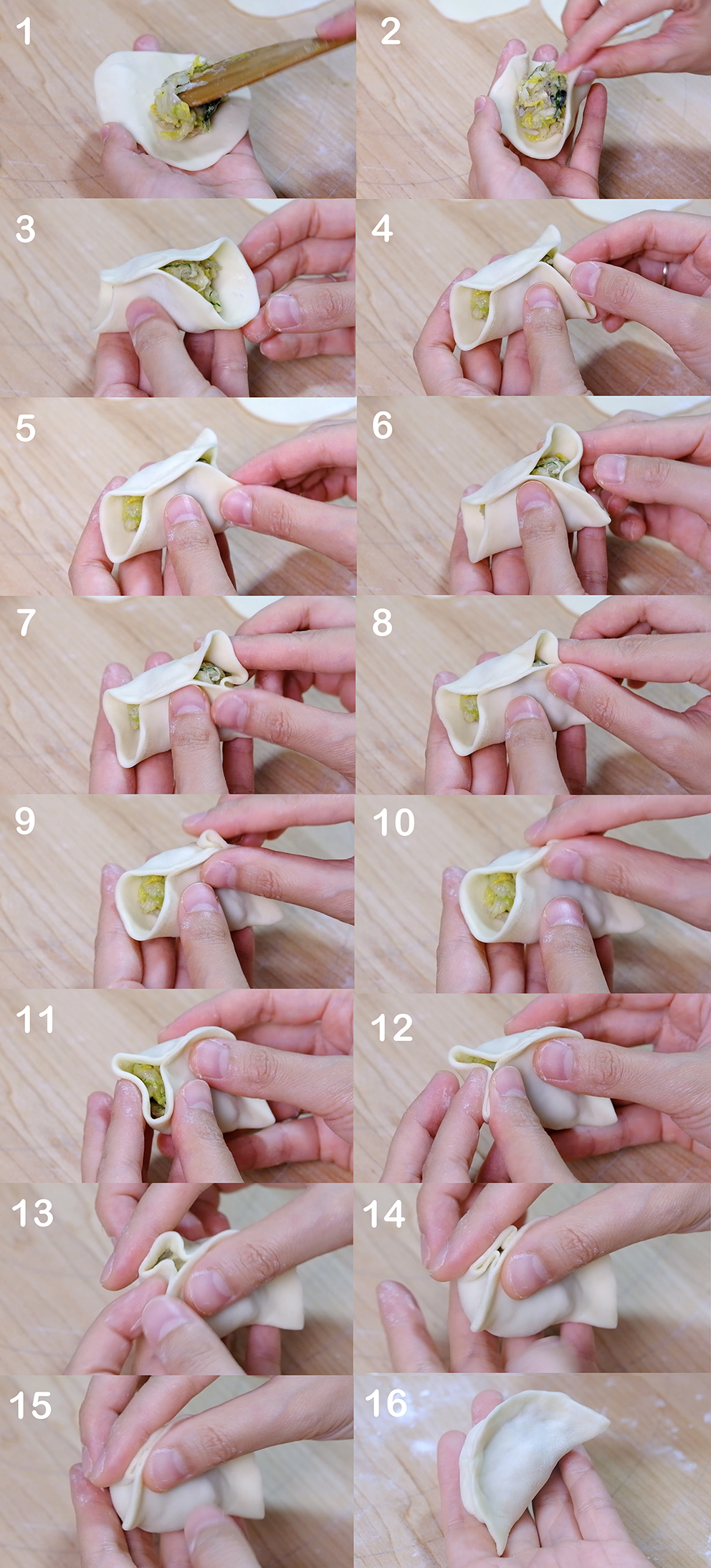
If you planned to eat them fresh, just place the finished dumplings on a floured surface to keep them from sticking


Transfer them to Ziplog Bag and throw them back into freezer for use later (consume within 3 months)
Cooking Method
A thick heavy bottom NON-STICK pan with a lid is a perfect way to fry the dumplings.
This kind of pan is important to ensure the even distribution of the heat so that every dumpling can be cooked to a similar golden colour.
You can use regular pan, but you run the risk of the dumplings sticking to the bottom of the pan; you don’t want to ruin your hard work 😒
And for the Gyoza, whatever the size of your pan, make sure you’ve got a plate that fits on top of it;
Because you are going to turn out a Gyoza at the end, so if your plate is not the right size, you can end up with a bit of mess.
And make sure you use a deep pan and enough water to boil the dumplings 😉
No matter how you wish to cook them, frozen dumpling don’t need to be defrosted beforehand
Let’s start cooking!
PAN FRIED (Guo Tie) 锅贴

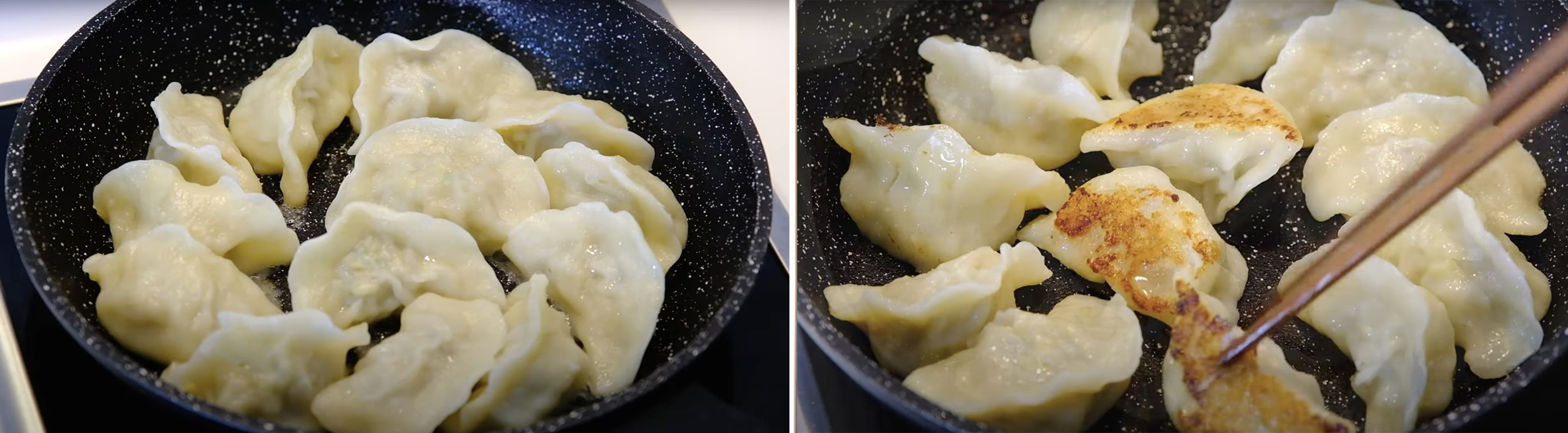
Place dumplings in a circular formation (make sure each bottom of the dumplings is in touch with the oil) leave a little bit of space between each one
Allow them to fry for a couple minutes

Once it turned light brown, pour in the Water (make sure it cover one half part of the dumplings)

After 10 minutes, you can see that the water has reduce quite a lot (shake the pan to make sure there’s nothing sticking to the pan)


GYOZA 餃子

Mix 300 g Water with 2 tbs Potato Strach (can be substitute it with Corn Starch/ Plain Flour/ Rice Flour)
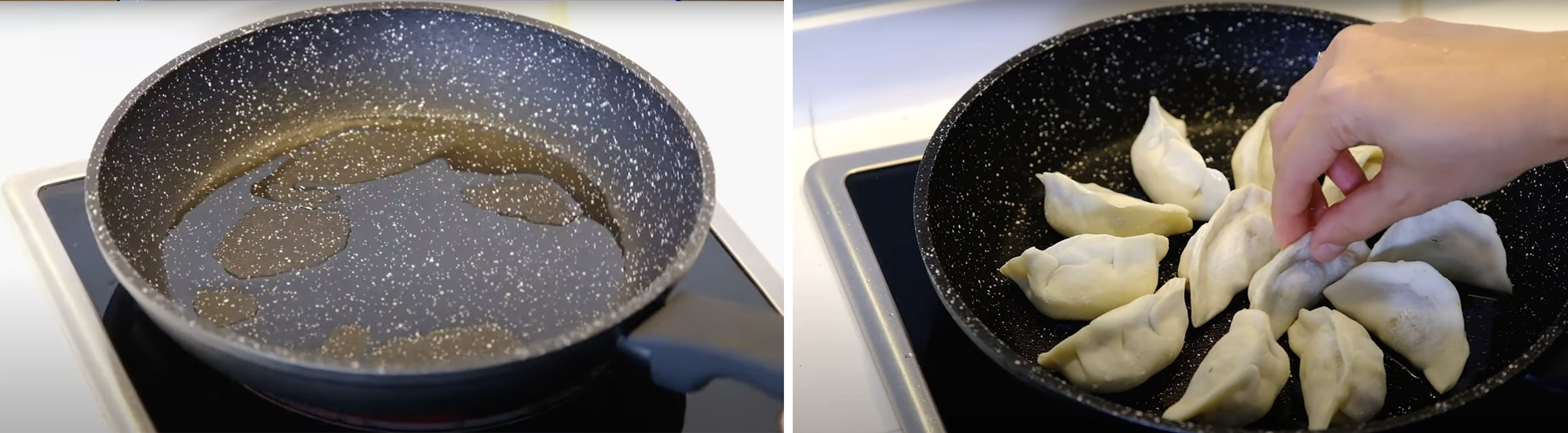
Place dumplings in a circular formation (make sure each bottom of the dumplings is in touch with the oil) leave a little bit of space between each one
Allow them to fry for a couple minutes
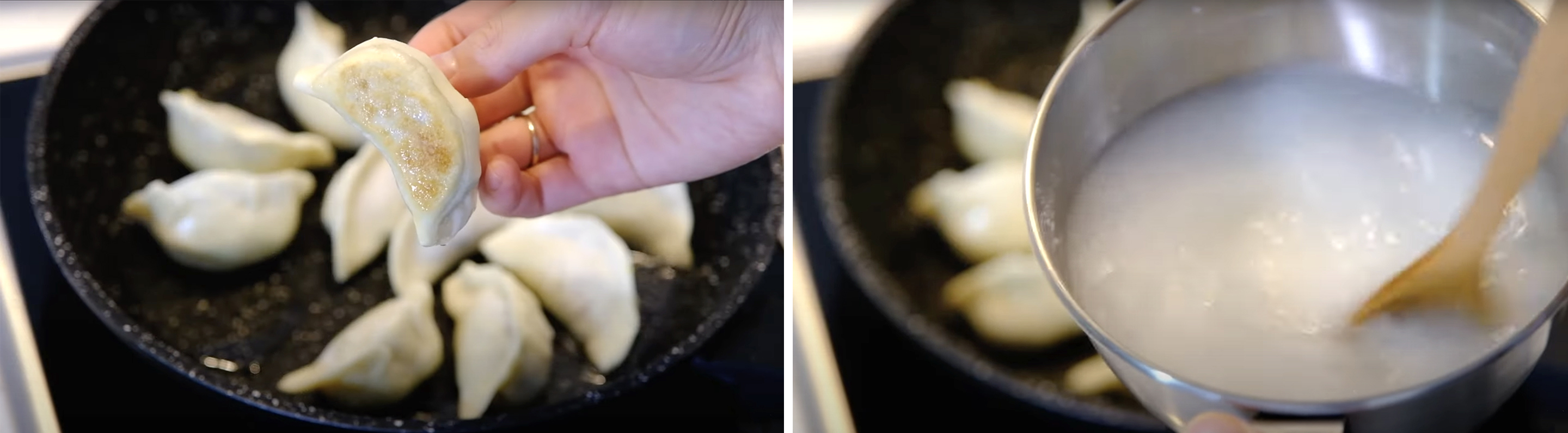
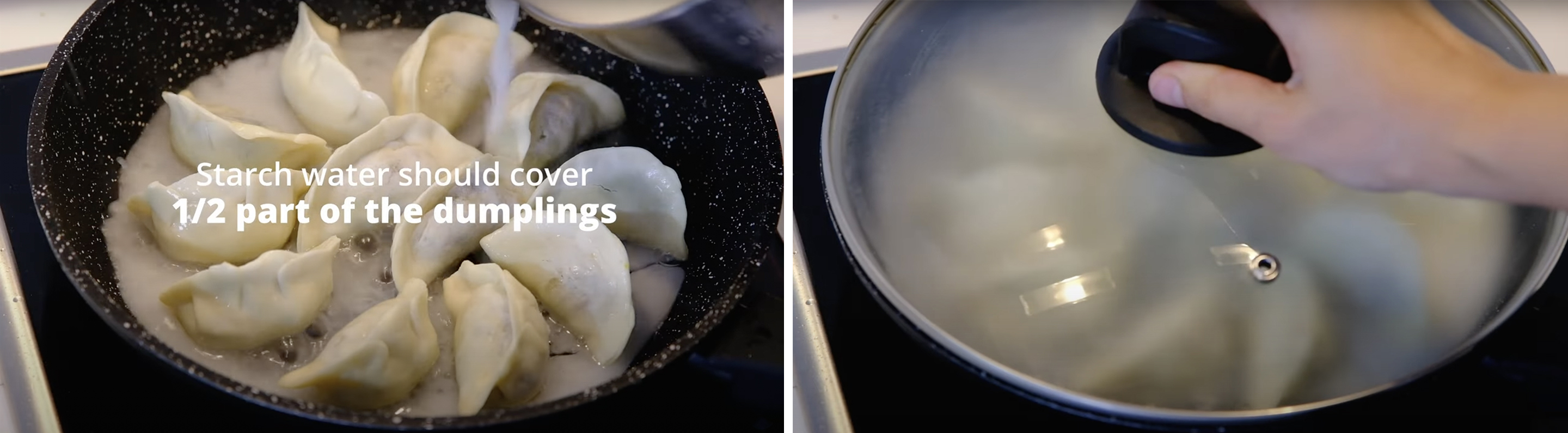
Once it turned light brown, pour in the Starch Mixture (don’t forget to stir the mixture before you pour it, to make sure that the starch is evenly distribute)
You don’t need to use all the starch mixture, just make sure it cover one half part of the dumplings (if you use bigger pan, you might need more starch mixture; kindly double the recipe as needed)


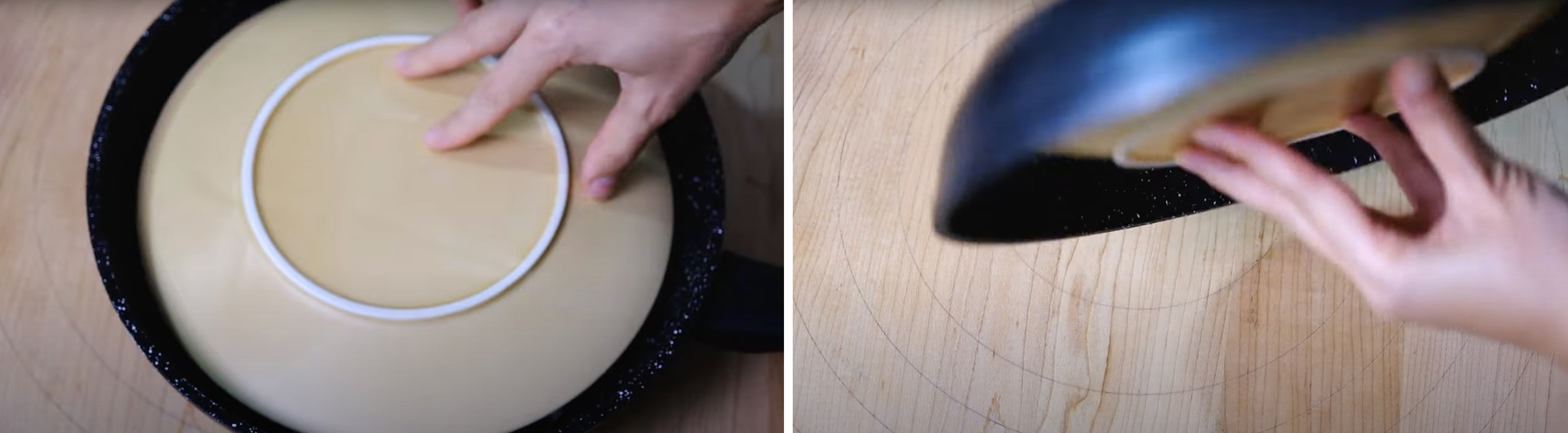
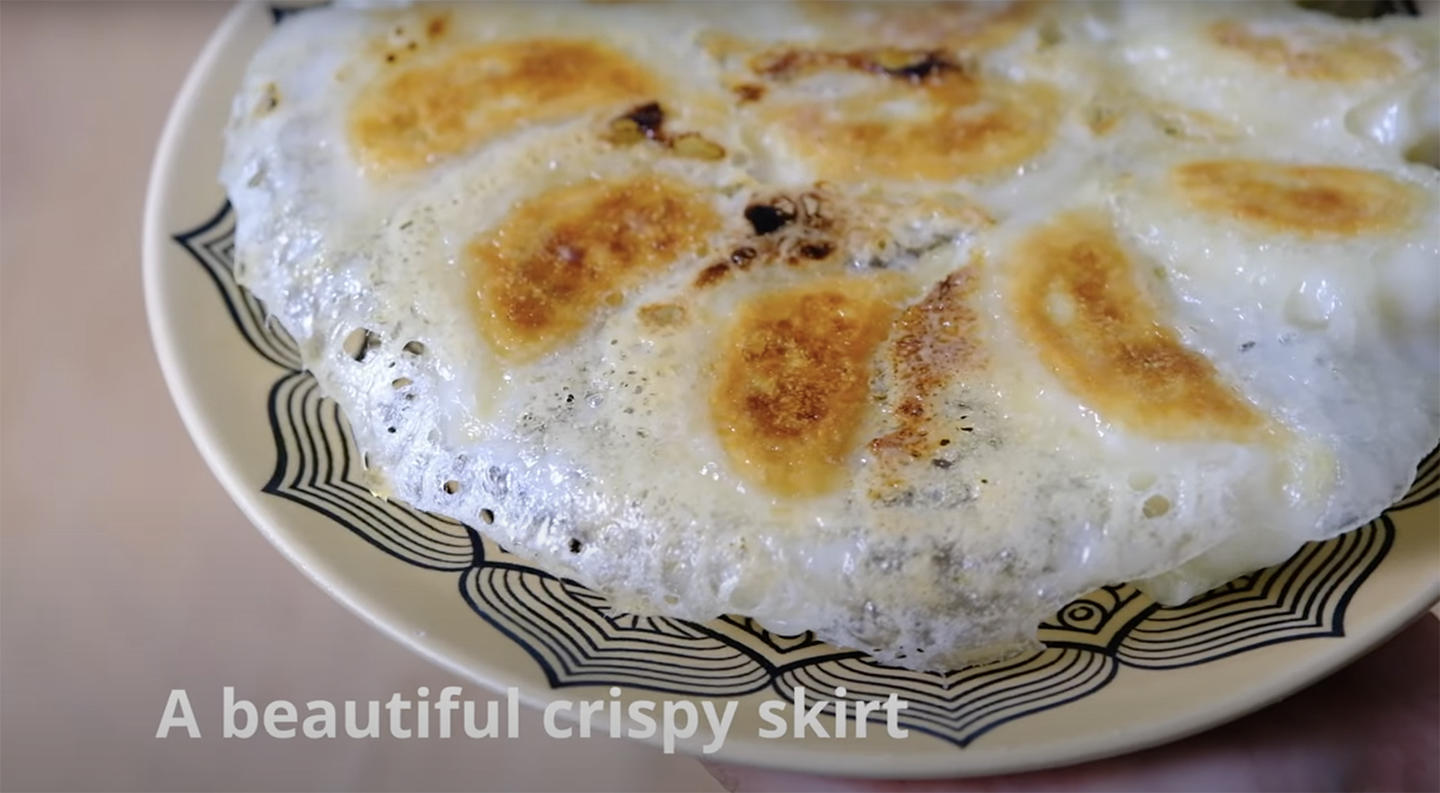
There’s a satisfaction in making a crisp sound when breaking the dumplings apart! 🤪
BOILED (Shui Jiao) 水饺
We will use the Chinese Traditional Method called Dian Shui (点水) to boil the dumplings
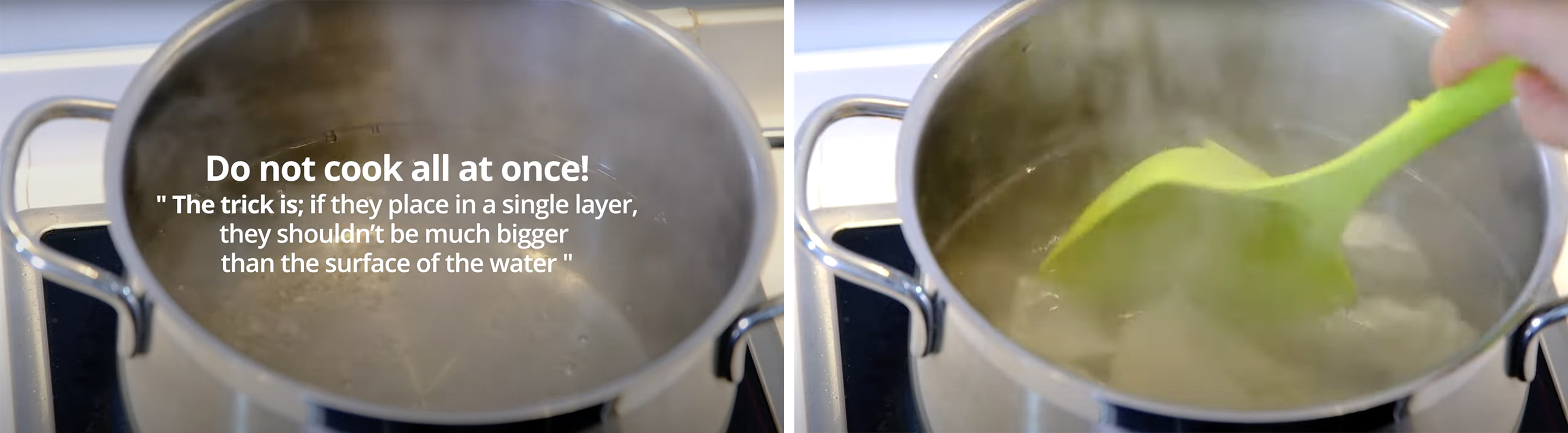
Stir them gently, make sure there’s no dumplings stick at the bottom of the pan


Repeat the process of a boil and add water 2 more times

Drain it and you can serve it immediately

Don’t let them wait too long, boiled dumplings BEST SERVE when it still hot 🤩
Dipping Sauce
No dumpling is complete without a delicious dipping sauce ☺️
For my family, dipping sauce is very important for dumplings, especially if you like spicy; you might interest to try my “MOM’s Special Homemade Sauce”

120 g Hot Garlic Chili Sauce, 30 g Water, 1 tbs Sugar, 1 tsp Sesame Oil, 1 tbs Light Soy Sauce, 1 tsp Chinese Black Vinegar and 1 tbs Garlic (minced)

Notes
- To Freeze the Uncooked Dumplings
If you’d like to freeze the uncooked dumplings, wrap the container tightly ,allow to freeze overnight (freeze them in a single layer, don’t stack).
And then on the next day, transfer them to Ziploc bags and throw them back into the freezer for use later. Freeze up to 2 months for best flavour and texture (consume within 3 months). - To Store the Left-Over Cooked Dumplings and Reheating
In the refrigerator, cooked dumplings will last about 3-5 days. Always put them in an airtight container to prevent the dumplings from drying out. - To reheat the left-over cooked dumplings
Pan-Fried and Gyozain the preheated 180°C oven for about 10-15 minutes
Boiled recook in the hot boiling water for about 5 minutes.