
Hi Guys, today we are making these “Traditional Orange Nian Gao”. A symbol of a high year, an increase in prosperity and a good luck.
Despite numerous varieties, my favorite will always be the West Java Indonesian Nian Gao which they called “China Cake”.
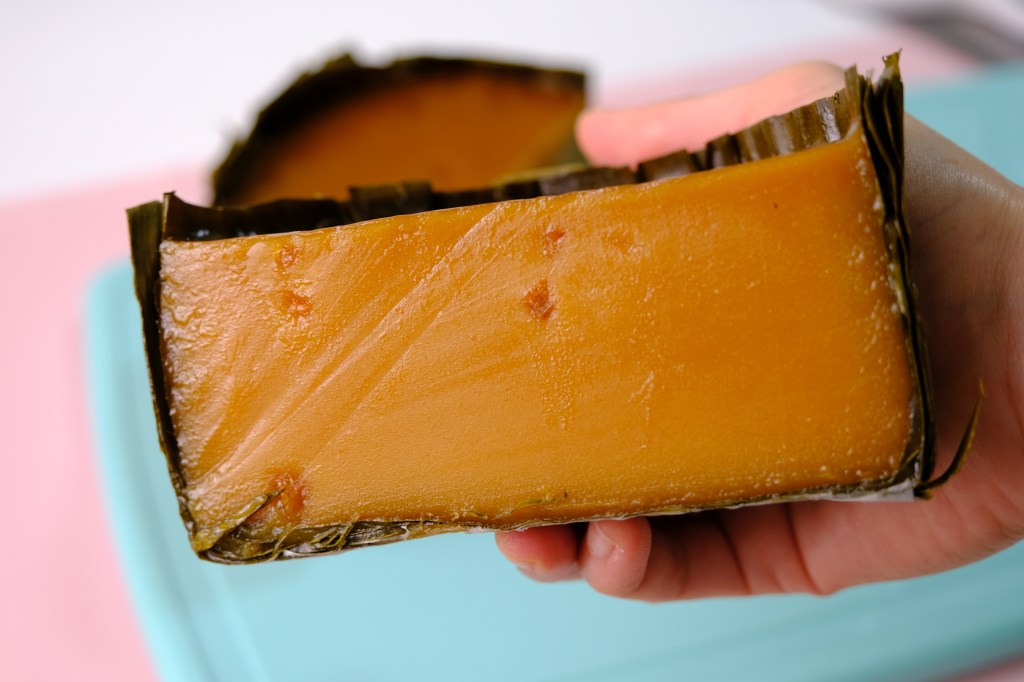
It’s made by mixing the glutinous rice flour, pure Gula Malacca, salt and water, then add in the minced orange peel to the mixture.
By using pure gula malacca and orange peel not only so much better in flavour, but it also has a lovely fragrance.

The color of course much darker and after so many hours of steaming, it will turn very dark, almost of a similar sweet cake, Dodol.

Some people use greaseproof paper or even food grade plastic for layering the moulds,
I personally love to use banana leaves simply because it’s natural and healthier and also add more delightful fragrance to your Nian Gao.

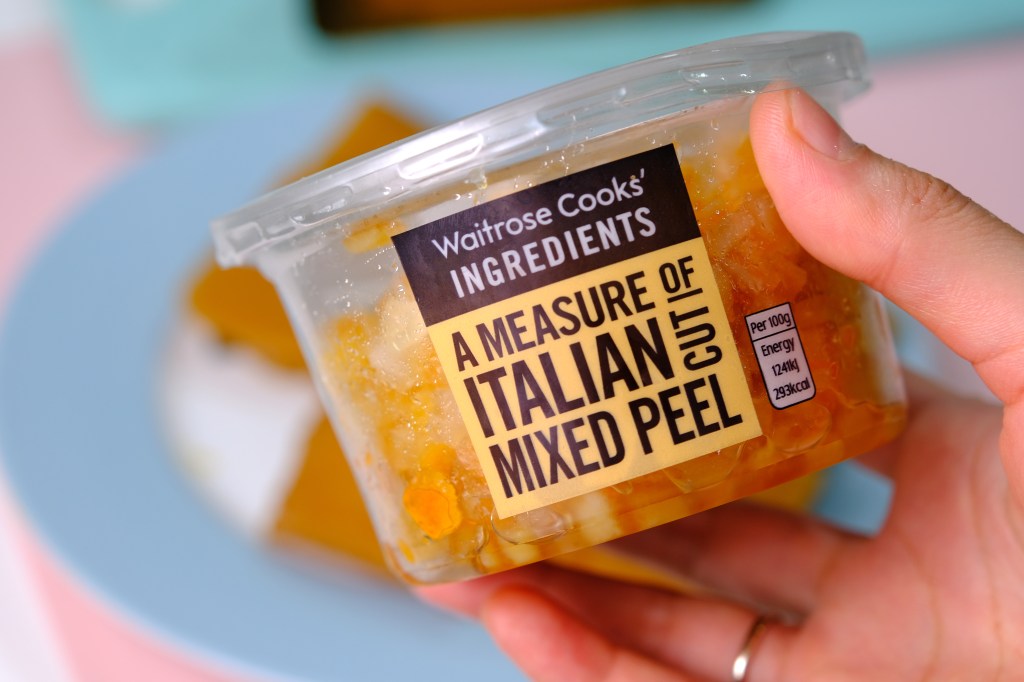
And for the orange peel, I am using Japanese minced dried yuzu peel here or you can substitute it with Italian mixed peel. It also works well.
The Nian Gao will still appear very soft at the end of cooking time, we need to let them cool down completely, let it sit at room temperature in a plastic container or wrapper for at least 24 hours before unmoulding.
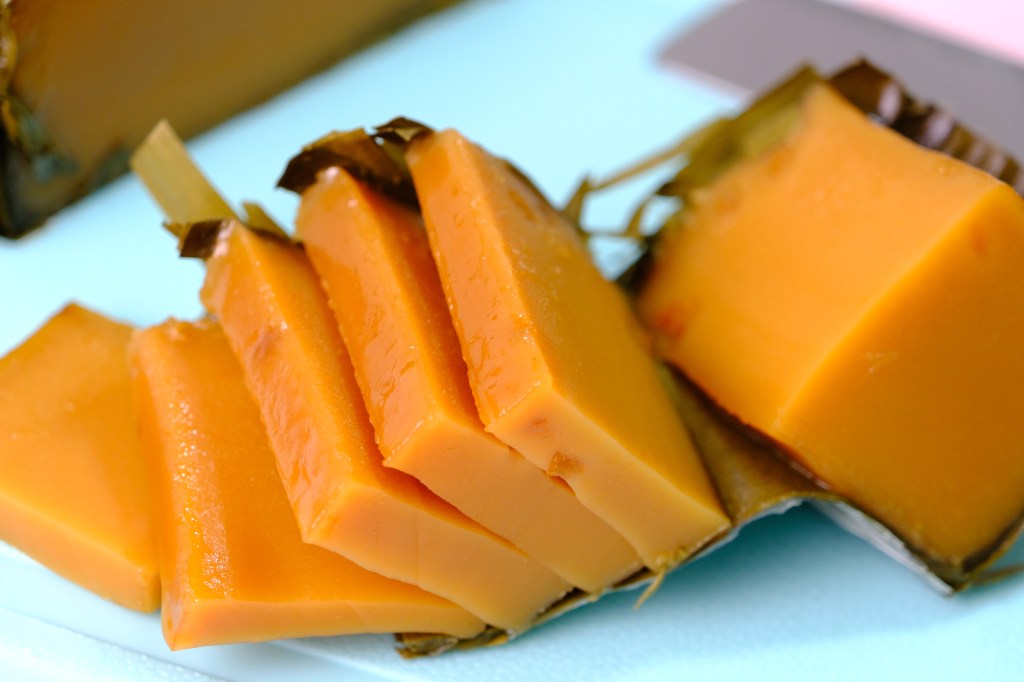
You can eat the rice cake once it’s steamed, just remember that it’s very sticky and gooey when it’s hot.
The best way to enjoy this Sweet Rice Cake is wait for it to cool. They will be slightly firmer or you can store them in the fridge so it will firm faster and easier to sliced them.

Nian Gao also a popular gift when visiting family and friends during the chinese new year celebration.
If you have plan to make this as a present, you can simply cover the top with a piece of acetate film with some Chinese New Year sticker on it, and before you stick them, make sure that you apply some vegetable oil onto the acetate film so it will be easier to remove later.
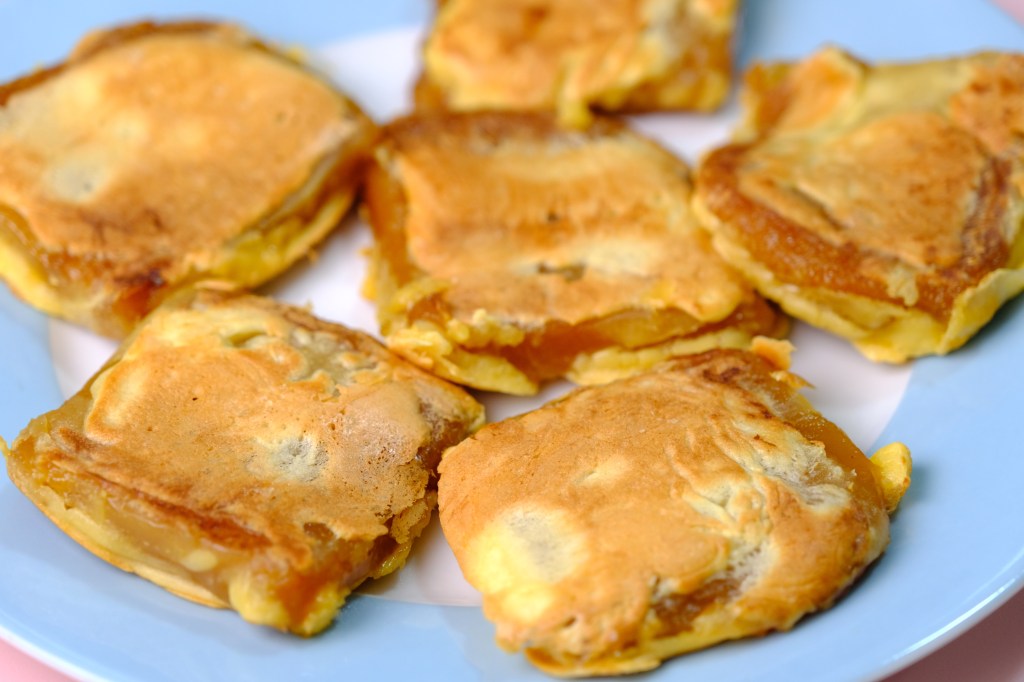
And when ready to serve them just reheat with steamer or microwave if you want to eat them plain or you can follow my Pan-Fried or Steamed Coconut Nian Gao recipe, a great way to use leftover Nian Gao from Chinese New Year. It’s really good!

Look!! Light and airy thin batter coating the outside of the nian gao, while soft, chewy and stretchy Nian Gao on the inside.

And for the Steamed Coconut Nian Gao also quite easy and so delightfull, and it’s perfect for coconut lovers.
You just need to steam the grated coconut for about 10 minutes, add in the salt, and simply fully coat the softened nian gao with grated coconut.
How cool is that?

Whishing you a happy and prosperous Chinese New Year! It’s time to celebrate the hard work, a time for families to reunite, feast, give thanks and rejoice.
I hope you enjoy these recipe as much as I do, Love You All!
TRADITIONAL ORANGE NIAN GAO
Yield: Three 5-inch Round Pans or (One 6-inch, One 5-inch and One 4-inch)
Active time: 1 1/2 hours
Total time: 4 hours
INGREDIENTS
Molds:
- Three 5-inch Round Pans or (One 6-inch, One 5-inch and One 4-inch)
- Banana Leaves
- Rubber Band
Nian Gao Batter:
- 550 grams Gula Malacca
- 700 grams Water
- 1/2 teaspoon Salt
- 600 grams Glutinous Rice Flour
- 3 tablespoons Orange Peel
Pan-Fried Nian Gao (For 1 Pan):
- One 5-inch Nian Gao (Sliced)
- 50 grams All-Purpose Flour
- 1/2 teaspoon Baking Powder
- 1/4 teaspoon Salt
- 50 grams Eggs
- 3-6 teaspoons Ice Water
Steamed Coconut Nian Gao (For 1 Pan):
- One 5-inch Nian Gao (Sliced)
- 250 grams Grated Coconut
- 1 teaspoon Salt
INSTRUCTIONS
Molds
- Remove the center hard part of the banana leaves (you can use greaseproof paper or food grade plastic). Clean the leaves under running water.
- Blanch the banana leaves in hot boiling water for about 5 minutes to soften it so it won’t tear easily (alternatively you can soften it by heating over a stove). Pat them dry.
- Using the moulds as a guide, measure the length and width of the leaves.
The width should be 2 times of the height of the moulds, and the length should be enough to cover the circumference of the mould. Cut off the excess. - Wrap the leaves around the mould, covering half of the outer rim.
Secure the position of the leaf by putting a rubber band around the rim of the container. Insert the remaining part of the leaves into the mould.
* Please note that the leaves should cover the inner wall and at least half of the bottom part.
To help shape the inside part of the mould, insert a smaller round container into the mold and press the leaves against the base and the inner wall of the mold.
Repeat the same process by adding two more leaves. Don’t be confused if the leaves is too small, you can still use it by patch them to one another. - For the bottom part, cut 2 pieces of round shaped leaves with the diameter slightly bigger than the base and then insert and press against the bottom to cover the base completely.
Nian Gao batter
- Place gula Malacca, salt and water in a saucepan and bring to a gentle simmer, until the sugar completely melted.
- Once melted, remove from the heat, strain the mixture and let it cool completely.
In the meantime, prepare the steamer by bringing the water to a rolling boil. - After the sugar mixture cooled down, gradually pour it into the glutinous rice flour, stirring in between until the mixture is smooth. Strain the mixture to make sure there’s no lumps persist.
- Pour the mixture onto the moulds (do not fill the mould all the way to the top, leave half inch clear space to top of the pan).
- Sprinkle 1 tablespoon orange peel for each mould, tap the mould for a few times, cover each moulds with aluminium foil to prevent the water condensation drops to the Nian Gao.
- Place inside the steamer and steam on medium heat for 2 hours (you may need to refill the water throughout the cooking process, don’t let it dry out).
- Take it off from the heat, remove the aluminium foil immediately and then let it sit on a cooling rack to cool completely before storing.
- Wrap in a plastic container for at least 24 hours before unmoulding.
- Unmould and cut of the excess banana leaves, leave about 1-2 cm from the edge of the Nian Gao.
Pan Fried Nian Gao
- Slice the Nian Gao in a square shape about 1/4-inch thickness.
- In a medium bowl mix the all-purpose flour, baking powder and salt. Add in the eggs and mix until just combined.
- Gradually mix in the ice water, don’t add the ice water all at once, start by adding 1 teaspoon at a time until you get the perfect consistency (not too thick or too watery).
Dip Nian Gao slices to the batter. - On a medium heat, apply some margarine to the pan (if you use butter, add some vegetable oil to avoid the butter burning).
- Pan fry the Nian Gao until golden brown on both sides, press once in a while to check whether the inside cooked well (control the heat so the batter won’t get burn while the Nian Gao on the inside isn’t soft and chewy just yet).
Steamed Coconut Nian Gao
- Slice the Nian Gao in a square shape about 1/4-inch thickness, steam or microwave it until a bit sticky and soft.
- Steam the grated coconut for about 10 minutes. Add in the salt, stir well.
- Coat the softened Nian Gao with salted grated coconut.
NOTES
- Yes you can eat the Nian Gao once it’s steamed, but it will be very sticky and gooey when it’s hot.
- The best way to enjoy this Nian Gao is wait for it to cool.
At day 3, usually the this cake will be much more firm or you can store them in the fridge so it will firm faster and easier to sliced them. And when you cut, don’t forget to apply some vegetable oil to your knife or any kitchen tools to prevent stickiness. - To store Nian Gao; 2 days at room temperature, 1 week in the fridge, 6 months in the freezer.
- Pure Gula Malacca should be dark in colour and pliable to touch. Hard lighter colour gula malacca have likely been mixed with cane sugar.